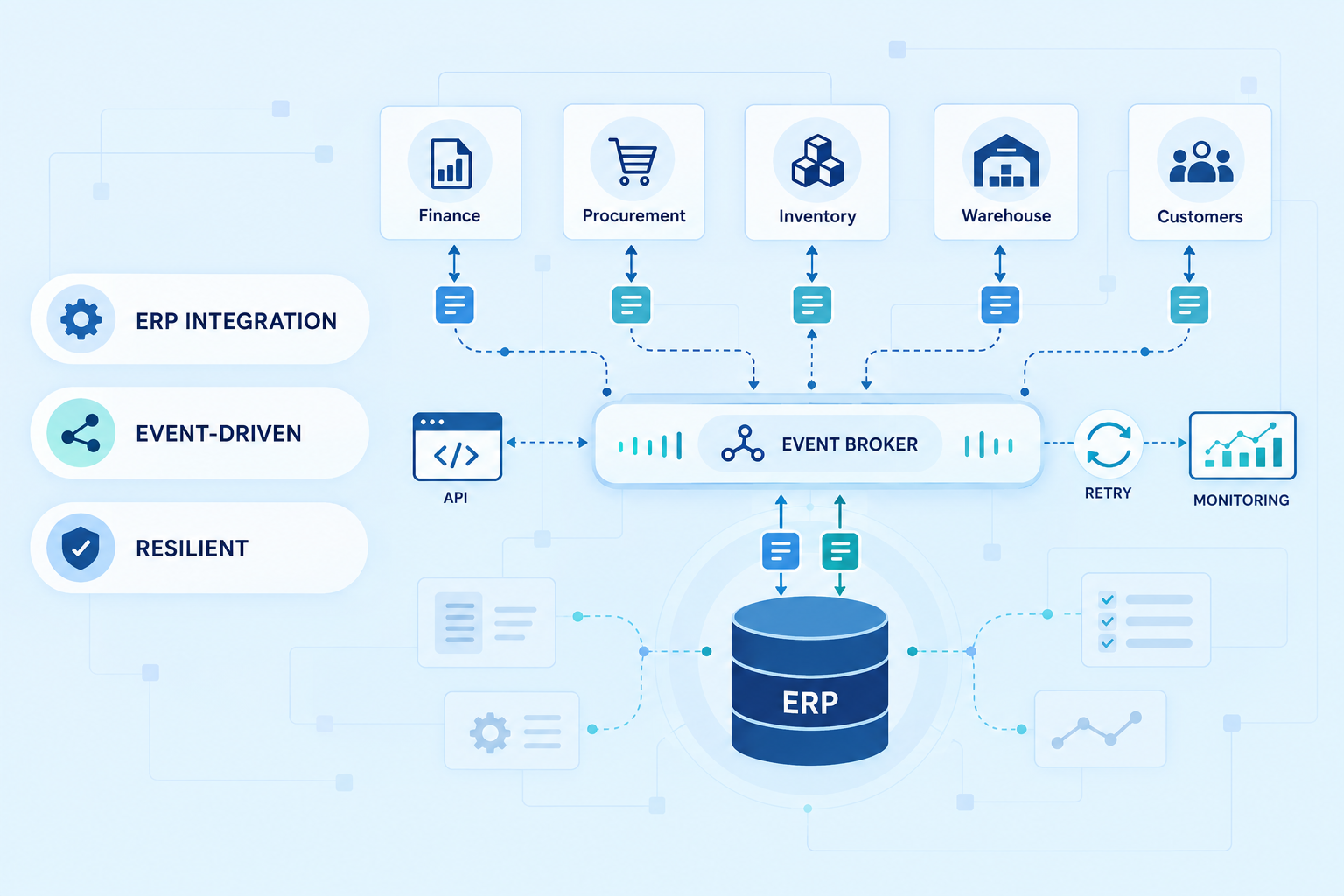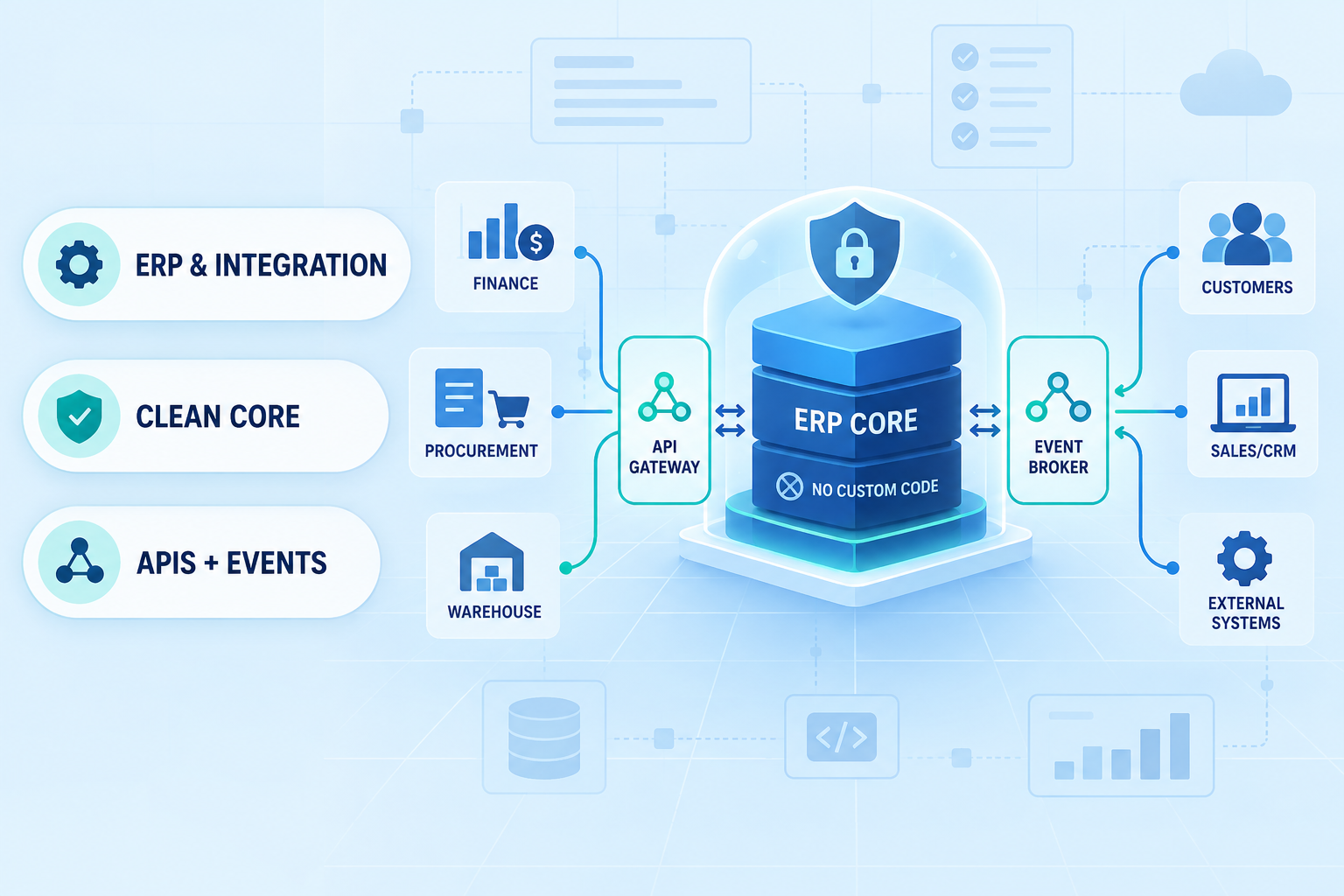

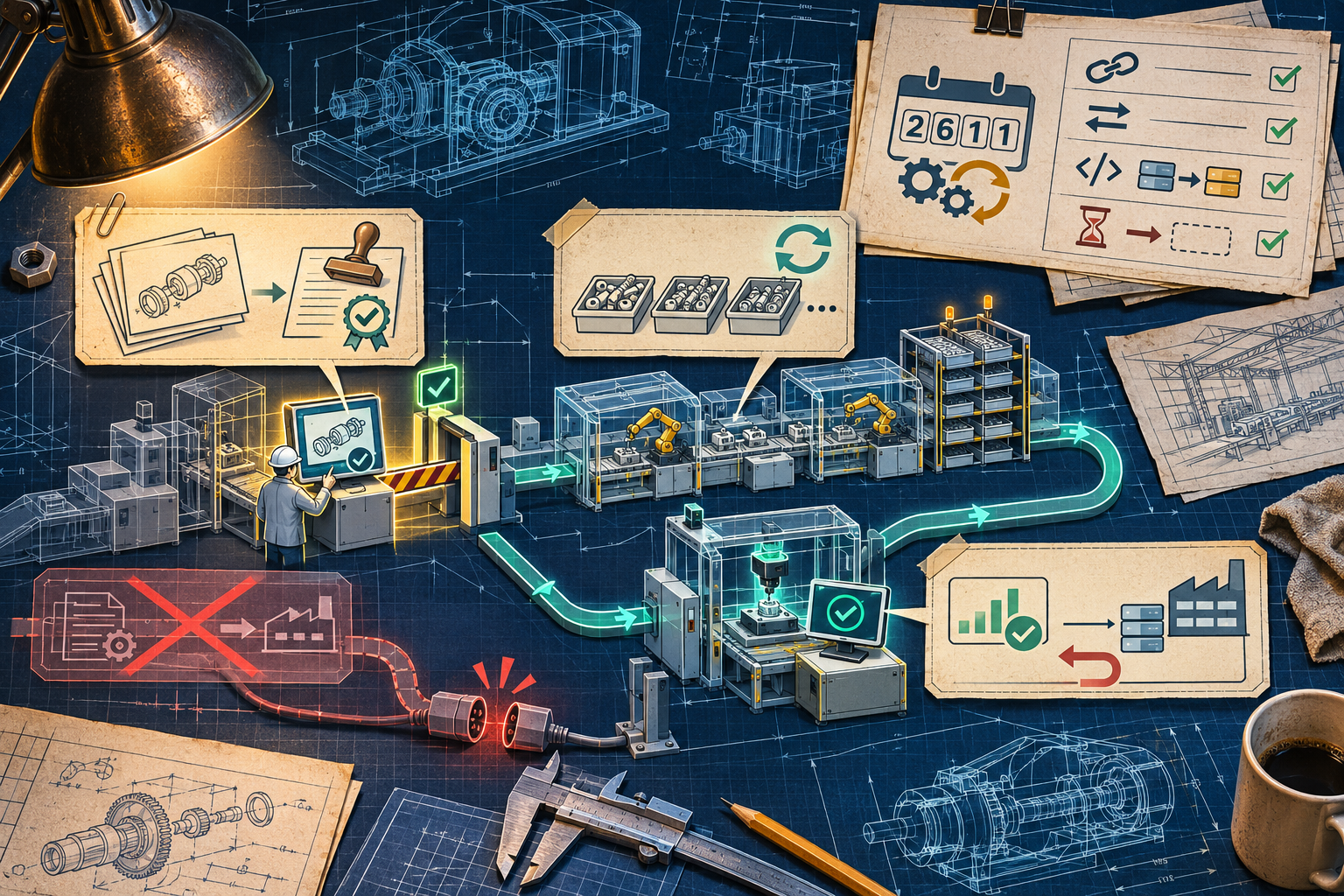
A manufacturing-cloud release can pass a user-interface smoke test and still break the plant-to-ERP contract. Order release, component assembly, yield confirmation, cancellation and work instructions cross roles and systems. A change in an API version, collaboration directive or deprecated integration setting can leave the shop floor and ERP with different truths.
SAP Digital Manufacturing release 2611 reached production on November 21 according to SAP’s schedule. Its execution notes include approval flows for work instructions, asynchronous bulk assembly endpoints, yield-confirmation cancellation back to ERP and a reminder that an older auto-release setting will be removed in a future release. The safe response is not panic; it is a contract-focused regression plan.
Build a release impact inventory
Map each changed or announced capability to plants, orders, PODs, APIs, integration flows, ERP systems and owners. Mark what is new, changed, deprecated and merely announced. Do not enable preview or optional behavior simply because it appears in notes.
Record current versions and customizations. A plant that never used auto-release has a different risk from one whose dispatch rhythm depends on it.
Test approvals as a governed workflow
For work-instruction approval, verify who creates, reviews, approves, rejects and republishes. Test segregation of duties, notifications, audit history and what operators see while approval is pending. Confirm the production line cannot use an unapproved instruction through an old URL or cached document.
Treat bulk assembly as an asynchronous job
A bulk endpoint that accepts many components may return a job rather than a finished business result. Persist the job identifier, poll with bounded backoff, handle partial errors and make retries idempotent. Reconcile every component, not only overall success.
Load-test realistic product structures and shift volumes. Define timeout and recovery behavior when the shop-floor client disconnects after submission.
Exercise the reversal loop
Yield cancellation should update Digital Manufacturing, the integration layer and ERP consistently. Test successful reversal, already-posted downstream consumption, closed periods, network interruption and duplicate messages. Capture correlation IDs across every hop.
Operators need a clear business status: requested, transmitted, accepted, rejected or reconciled. A green outbound message is not proof that ERP reversed the document.
Plan for deprecation early
The announced removal of an auto-release setting in a future release provides time to replace it with a production process or controlled manual release. Inventory every workflow and plant relying on the old option. Design the replacement, run both paths in a test landscape and train planners before the deadline.
Version every integration contract
Capture endpoint, schema, authentication, directives, collaboration links and error structure. Add consumer-driven contract tests for required and optional fields. When a V2 API appears, do not assume it is a drop-in replacement for V1; compare semantics and lifecycle.
Use the quality system as rehearsal
SAP schedules quality upgrades before production. Run automated end-to-end tests there with representative master data and orders. Include plant devices, scanners, printers, ERP callbacks and exception dashboards. Record evidence by plant and critical process.
Protect live operations
Schedule validation around production windows, maintain manual fallback where safe, and define stop criteria. Monitor message backlog, confirmation age, failed approvals, assembly-job duration and ERP reconciliation after release. Escalate by business impact, not raw error count.
Close the change properly
Update SOPs, training, support scripts, architecture diagrams and interface catalogs. Remove obsolete workarounds after stabilization. Hold a post-release review with operations, quality, integration and ERP teams to capture unexpected behavior before the next site upgrade.
The takeaway: a cloud MES release is an integration event, not only a software update. Plants stay stable when they test approvals, asynchronous jobs, reversals and deprecations across the entire physical and digital process.
From announcement to dependable operations
Start with a bounded business problem and an accountable owner. Record the current cost, delay, failure rate, and manual work before changing the architecture. Define a measurable outcome, but do not present an estimate as guaranteed savings. Include security, finance, operations, and the people who will support exceptions after launch.
Map the current workflow before selecting technology. Identify the source of truth, approval points, downstream consumers, sensitive data, recovery objectives, and every manual workaround. Decide which step the new capability improves and which steps remain unchanged. This prevents a demonstration from being mistaken for an end-to-end operating solution.
Build a representative pilot with real permissions, data volume, dependency behavior, and user roles. Test peak demand, missing data, stale configuration, denied access, duplicate input, partial failure, recovery, and rollback. Document what continues when the new capability is unavailable. Keep an approved manual path for high-consequence decisions.
Security must be part of the design. Use separate workload identities, short-lived credentials, least privilege, encrypted transport and storage, controlled secrets, and auditable administrative access. Treat retrieved documents, event payloads, model output, and third-party responses as untrusted input. Validate every action at the boundary where it affects money, data, equipment, customers, or regulated records.
Cost controls need similar depth. Tag usage to a product and owner, define budgets and anomaly thresholds, measure cost per successful business outcome, and include integration, support, data movement, licensing, and training. A lower infrastructure bill can be offset by more exceptions or human correction. Evaluate total process cost rather than one service price.
Operate the result like a product. Monitor availability, latency, unit cost, data quality, security findings, user adoption, exceptions, and support effort. Version configurations and decision rules. Log changes and approvals. Review whether the capability still solves the original problem as prices, products, and workflows evolve.
Prepare the support model before launch. Give responders dashboards, runbooks, ownership, escalation paths, and safe diagnostic access. Alert on stale data and silent degradation, not only complete failure. Practice a dependency outage and verify that queued work, retries, reconciliation, and user communication behave as designed.
Change management is also technical risk control. Explain what users should trust, what they must verify, and how they report a wrong result. Train with real scenarios and capture overrides as useful feedback. Do not measure adoption by logins alone; measure whether the process becomes faster, safer, or more accurate.
Maintain a decision record that states why the technology was selected, which alternatives were considered, which risks were accepted, and what would trigger redesign or retirement. Review it after incidents and major vendor changes. Portability does not require avoiding managed services; it requires knowing which data, contracts, identities, and operational procedures must survive a change.
Expansion should follow evidence. Compare the pilot with its baseline, include the cost of integration and governance, and retire components that no longer earn their complexity. A new feature creates value only when teams can understand it, control it, recover it, and improve it without depending on one specialist.
Finally, schedule a formal review after thirty and ninety days. Ask whether users changed behavior, whether exceptions moved elsewhere, and whether actual costs match the forecast. Publish the findings to sponsors and delivery teams. If value is weak, narrow the scope or stop. Responsible innovation includes the ability to end an experiment cleanly.
Sources
- SAP Help — Digital Manufacturing 2611 execution changes
- SAP Help — Digital Manufacturing release schedule
Build it with Cogniquaint experts
Cogniquaint’s manufacturing, ERP and integration experts can analyze SAP Digital Manufacturing release impact, build contract and end-to-end tests, validate approvals and reversals, migrate deprecated workflows, instrument message reconciliation, and coordinate plant-ready cutovers with quality and operations teams.
Work with Cogniquaint
Ready to elevate your operations with AI-powered insights?
Get in touch with us to build your next intelligent solution.