
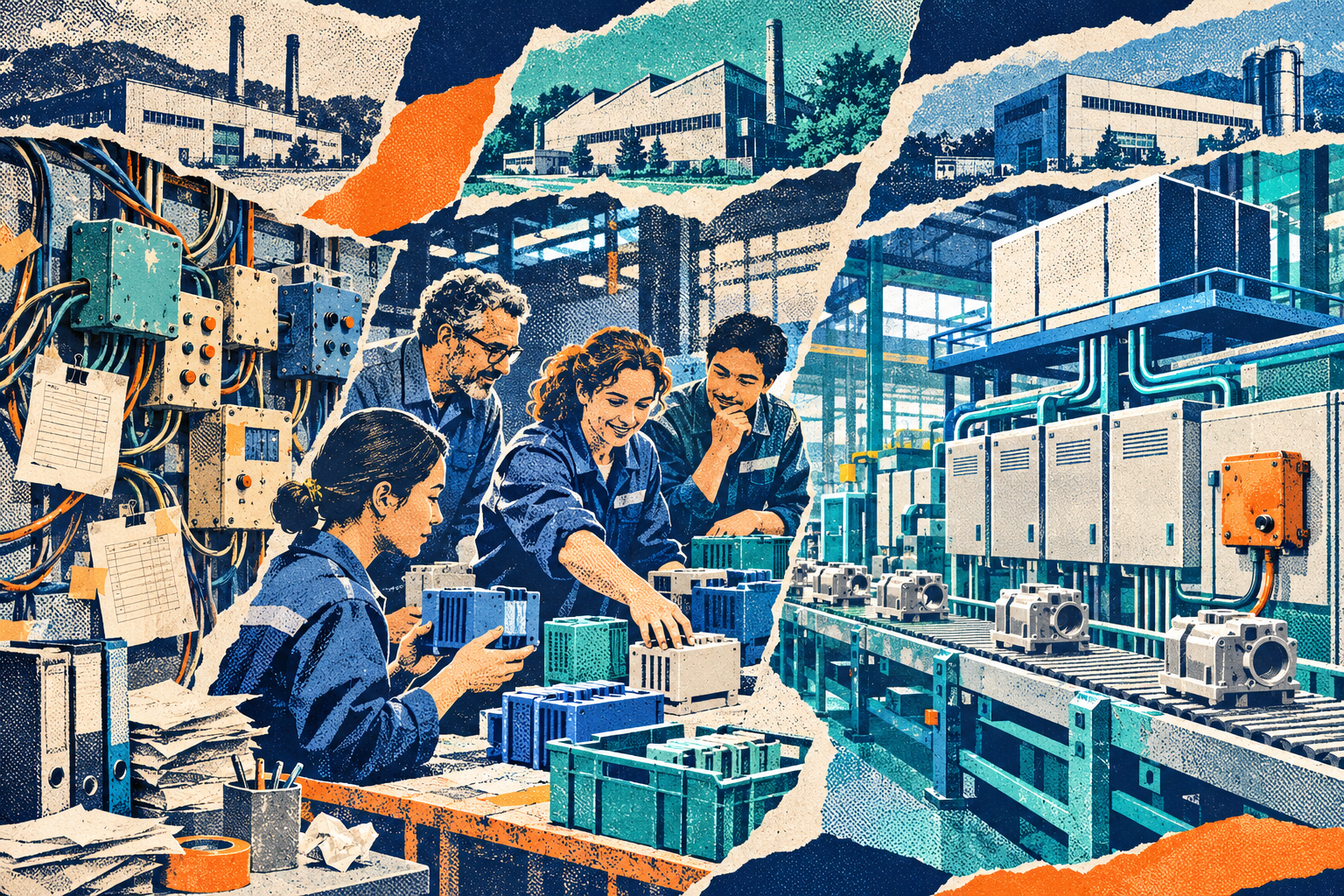
Years of plant-by-plant problem solving can produce a manufacturing landscape full of local applications, custom interfaces and site-specific workarounds. Each may have a valid history, but together they make upgrades, support, reporting and global innovation slow. SAP’s recent account of sensor and automation manufacturer ifm describes a move toward SAP Digital Manufacturing after finding that many internally built production-order, scheduling and traceability capabilities were already available in the standard solution.
The lesson is not that every plant should become identical. It is that global standards and local differentiation must be separated deliberately instead of being embedded together in custom code.
Inventory capability, not applications
List what each local tool actually does: dispatching, instructions, data collection, genealogy, quality, downtime, labor, material movement, labels, device control and exception handling. Record users, interfaces, business criticality, support cost and regulatory purpose. Multiple tools may implement the same capability differently.
Classify each difference
Place variation into four groups: common process, configurable local rule, external specialist capability, or obsolete workaround. Require evidence for custom extensions, such as regulation, product physics, equipment protocol or measurable competitive value. “The plant has always done it this way” is a discovery prompt, not an architecture decision.
Define system ownership
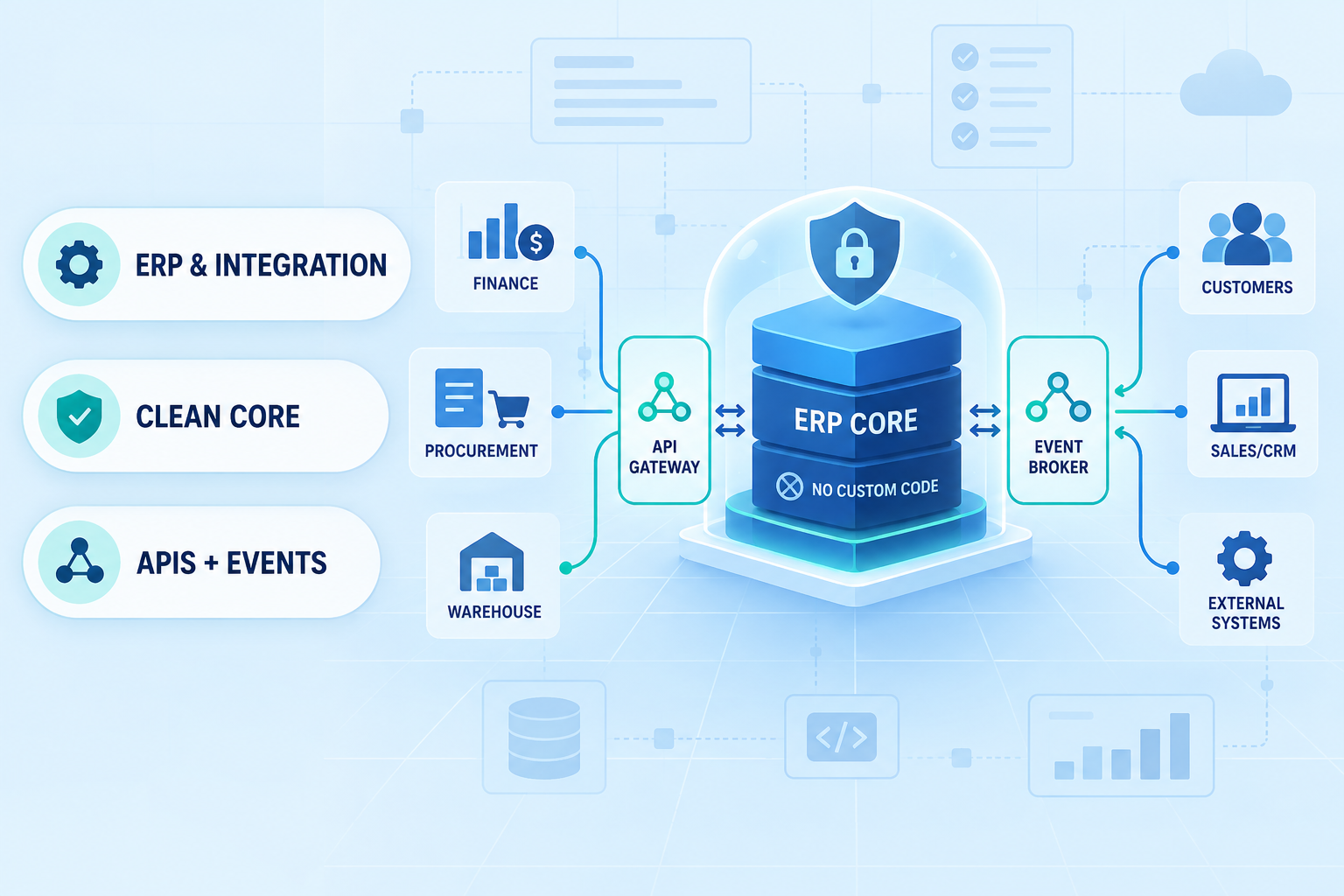
SAP documentation describes ERP or S/4HANA as the system of record for master data, while Digital Manufacturing owns work-in-process execution data in the supported integration model. Translate that into explicit ownership for material, BOM, routing, work center, order, inventory, batch, quality, confirmation and equipment state. Prevent both systems from independently correcting the same field.
Build a reusable integration contract
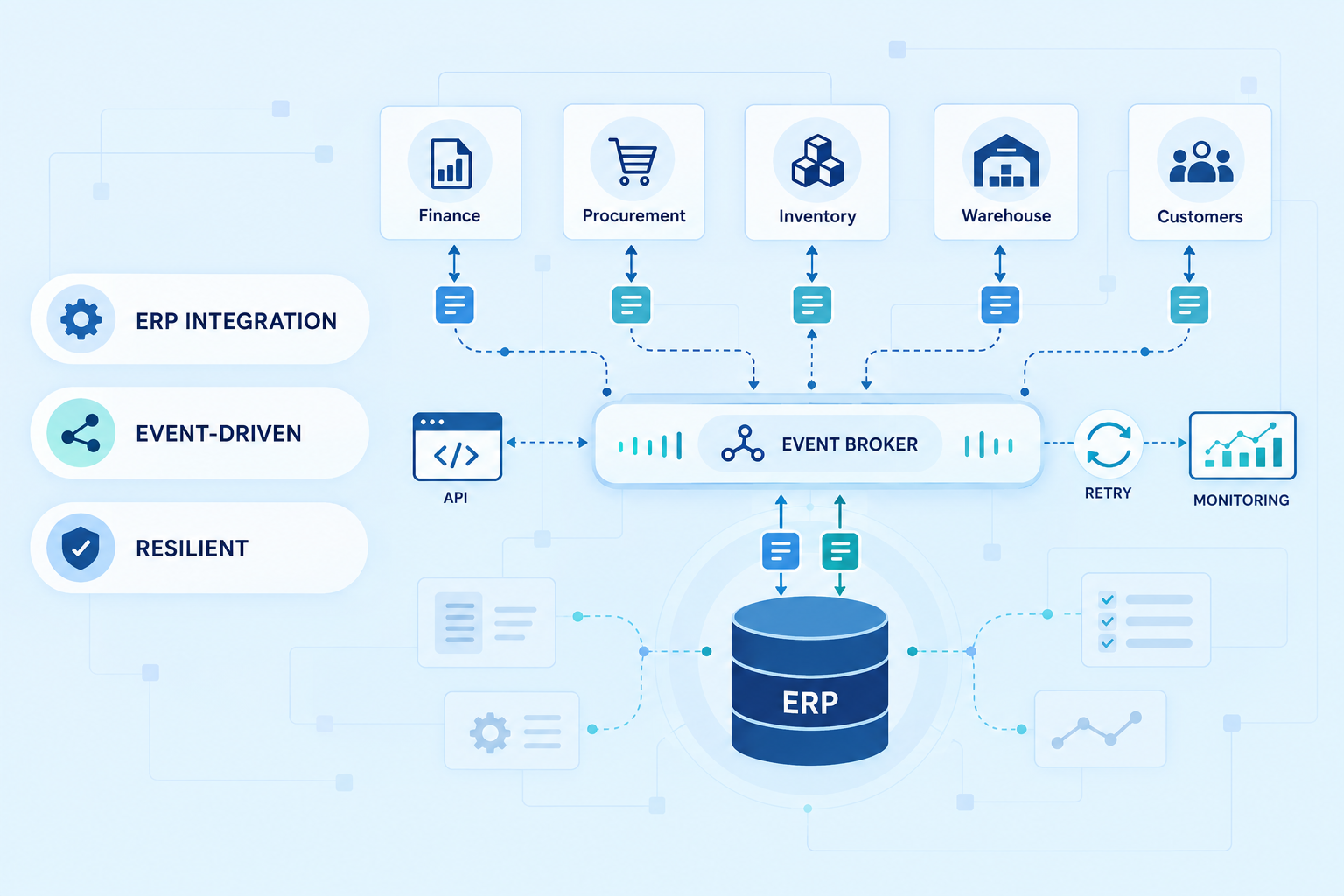
Standardize message semantics, identifiers, units, timestamps, retries, ordering, idempotency, error queues and reconciliation. Use supported connectors for ERP and shop-floor exchange where they fit. Keep safety and deterministic machine control at the appropriate industrial layer rather than pushing every function into MES.
Pilot a representative plant
A simple site proves little. Choose a plant with common flows plus several difficult realities: legacy equipment, rework, quality holds, alternate resources, intermittent connectivity and local compliance. Run end-to-end scenarios from released order through confirmation and inventory update, including failure and recovery.
Create a product governance model
Give the global template a product owner, architecture board, plant council, release cadence, regression suite and exception register. Let sites propose improvements with evidence. Promote useful local ideas into the standard; retire exceptions when their reason disappears.
Measure the transition honestly
Track interfaces retired, custom code, change lead time, support tickets, downtime caused by integration, training effort, data latency, genealogy completeness and operator work. Standardization has failed if central IT saves effort while operators add spreadsheets or manual re-entry.
The takeaway: MES standardization scales when it creates one understandable operating model with controlled extension points. The goal is fewer accidental differences while preserving the plant knowledge that keeps production safe and effective.
From announcement to dependable operations
Start with a bounded business problem and an accountable owner. Record the current cost, delay, failure rate, and manual work before changing the architecture. Define a measurable outcome, but do not present an estimate as guaranteed savings. Include security, finance, operations, and the people who will support exceptions after launch.
Map the current workflow before selecting technology. Identify the source of truth, approval points, downstream consumers, sensitive data, recovery objectives, and every manual workaround. Decide which step the new capability improves and which steps remain unchanged. This prevents a demonstration from being mistaken for an end-to-end operating solution.
Build a representative pilot with real permissions, data volume, dependency behavior, and user roles. Test peak demand, missing data, stale configuration, denied access, duplicate input, partial failure, recovery, and rollback. Document what continues when the new capability is unavailable. Keep an approved manual path for high-consequence decisions.
Security must be part of the design. Use separate workload identities, short-lived credentials, least privilege, encrypted transport and storage, controlled secrets, and auditable administrative access. Treat retrieved documents, event payloads, model output, and third-party responses as untrusted input. Validate every action at the boundary where it affects money, data, equipment, customers, or regulated records.
Cost controls need similar depth. Tag usage to a product and owner, define budgets and anomaly thresholds, measure cost per successful business outcome, and include integration, support, data movement, licensing, and training. A lower infrastructure bill can be offset by more exceptions or human correction. Evaluate total process cost rather than one service price.
Operate the result like a product. Monitor availability, latency, unit cost, data quality, security findings, user adoption, exceptions, and support effort. Version configurations and decision rules. Log changes and approvals. Review whether the capability still solves the original problem as prices, products, and workflows evolve.
Prepare the support model before launch. Give responders dashboards, runbooks, ownership, escalation paths, and safe diagnostic access. Alert on stale data and silent degradation, not only complete failure. Practice a dependency outage and verify that queued work, retries, reconciliation, and user communication behave as designed.
Change management is also technical risk control. Explain what users should trust, what they must verify, and how they report a wrong result. Train with real scenarios and capture overrides as useful feedback. Do not measure adoption by logins alone; measure whether the process becomes faster, safer, or more accurate.
Maintain a decision record that states why the technology was selected, which alternatives were considered, which risks were accepted, and what would trigger redesign or retirement. Review it after incidents and major vendor changes. Portability does not require avoiding managed services; it requires knowing which data, contracts, identities, and operational procedures must survive a change.
Expansion should follow evidence. Compare the pilot with its baseline, include the cost of integration and governance, and retire components that no longer earn their complexity. A new feature creates value only when teams can understand it, control it, recover it, and improve it without depending on one specialist.
Finally, schedule a formal review after thirty and ninety days. Ask whether users changed behavior, whether exceptions moved elsewhere, and whether actual costs match the forecast. Publish the findings to sponsors and delivery teams. If value is weak, narrow the scope or stop. Responsible innovation includes the ability to end an experiment cleanly.
Sources
- SAP News — What manufacturers can learn from ifm’s digital manufacturing journey
- SAP Help — Business integration with SAP S/4HANA or SAP ERP
Build it with Cogniquaint experts
Cogniquaint’s ERP, MES, IoT and manufacturing experts can inventory plant capabilities, design the global template and exception model, connect S/4HANA and shop-floor systems, validate master and transaction data, pilot hard scenarios, and help teams retire custom applications without losing essential local knowledge.
Work with Cogniquaint
Ready to elevate your operations with AI-powered insights?
Get in touch with us to build your next intelligent solution.