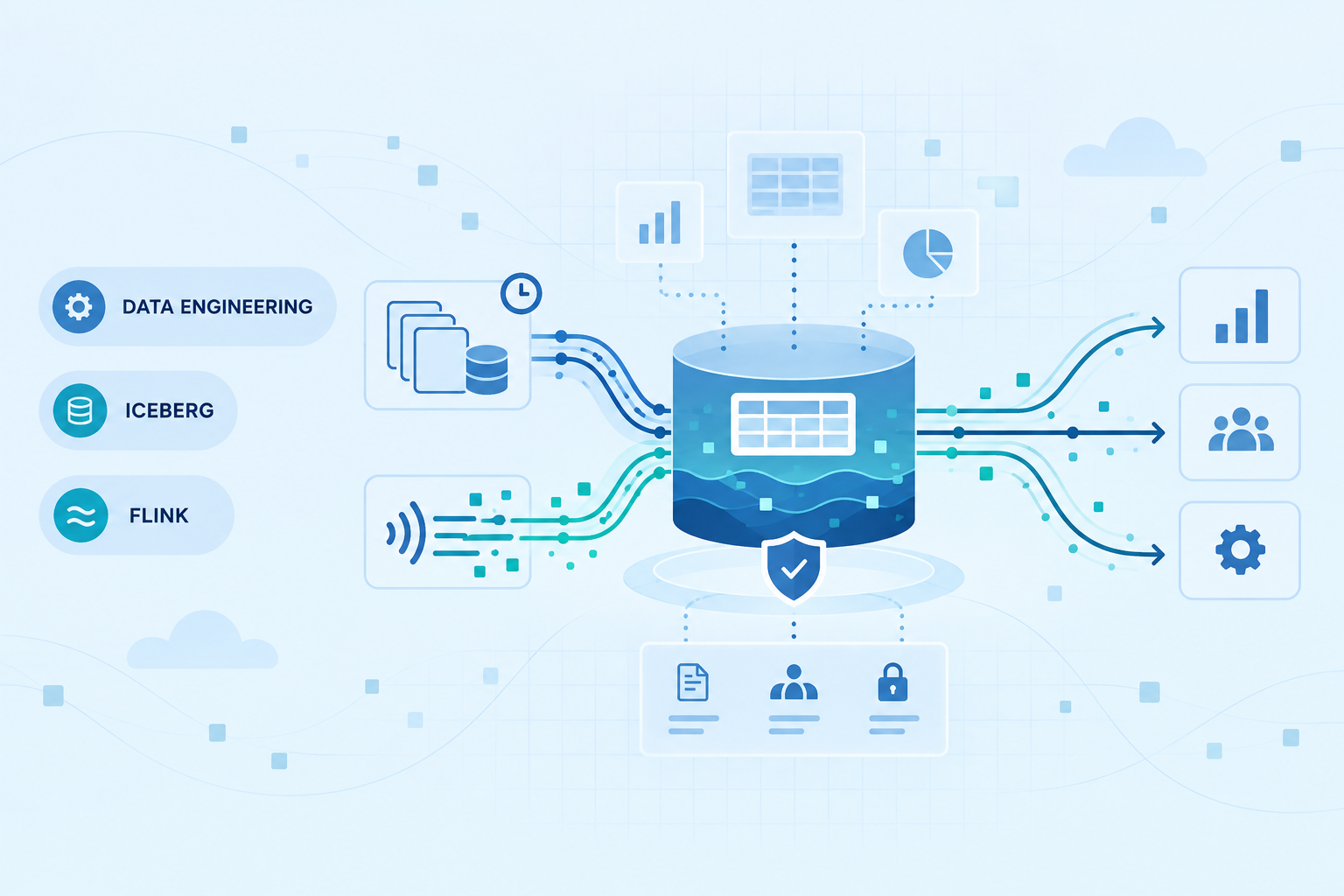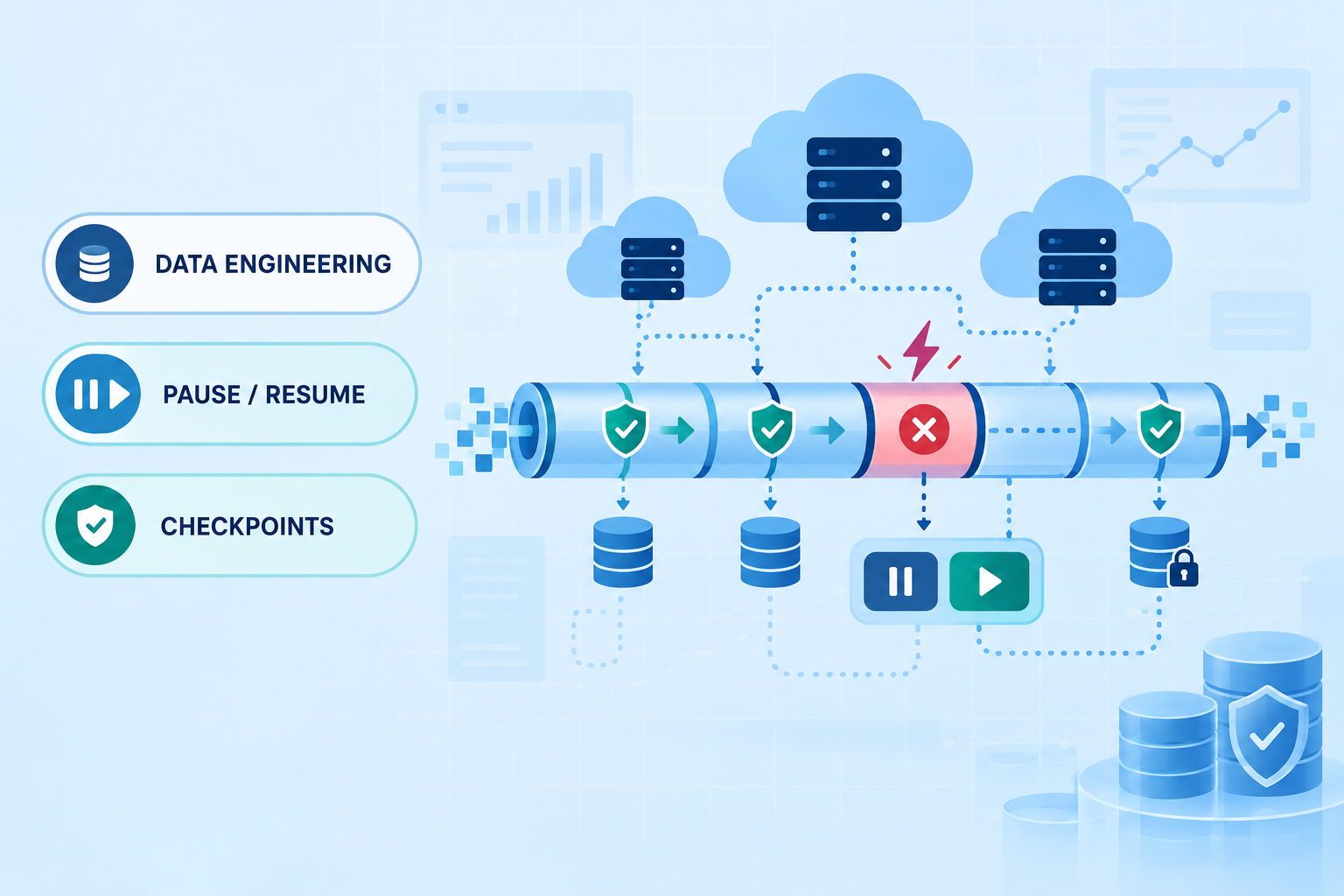


Data teams already know that customer email, supplier code, device serial number, or a combination such as plant and external asset ID should be unique. The guarantee often lives only in pipeline code or tribal knowledge. Databricks has introduced UNIQUE constraints in Public Preview for eligible Unity Catalog Delta tables, allowing multiple nullable or composite business keys to be declared alongside a primary key and referenced by foreign keys.
After validation, a constraint marked RELY can let the optimizer remove a redundant join or DISTINCT aggregation. That can cut shuffle and query time. The dangerous detail is that these constraints are informational: Databricks does not enforce them during writes. If the declared guarantee is false, an optimization can produce an incorrect result.
Separate identity from alternate keys
A primary key should represent the principal row identifier and cannot be nullable. UNIQUE constraints describe additional guarantees: username, tax identifier, or a composite source-system key. Document null semantics carefully; multiple nulls may be allowed even when non-null values must be unique. For composite keys, column order and type alignment matter when a foreign key references them.
Declare first with NORELY
Use the default non-relied state to make meaning discoverable without authorizing correctness-dependent rewrites. Inventory producers and consumers, then profile historical data for duplicate non-null values. For composite keys, group by every constrained column. Check child tables for orphaned references using an anti-join.
Build continuous proof
A one-time clean result is not a permanent guarantee. Add expectations or quality checks to each ingestion and merge path. Quarantine duplicates, alert an owner, and define whether the winner is earliest, latest, highest-priority source, or a manual decision. Monitor duplicate rate, orphan rate, late corrections, and rule changes by source.
Use RELY only after operational ownership
Mark the UNIQUE and relevant foreign key constraints independently. Confirm the intended rewrite with EXPLAIN on representative queries and compare result sets before and after. Keep canary checks that periodically execute an unoptimized reconciliation or direct quality query. If a source changes identifiers, remove reliance before the migration.
Apply the idea to industrial data carefully
A device serial number may be unique globally, per manufacturer, or only within a plant. Reused controller addresses and replaced sensors can violate an assumed lifetime key. ERP material codes may differ across company codes or source systems. Model the actual business scope rather than choosing the shortest column list.
Quantify the saving without copying a benchmark
Databricks reports large improvements in specific 10 TB benchmark cases where joins or shuffles disappeared. Your result depends on table size, selectivity, warehouse type, Photon eligibility, data layout, and query shape. Measure elapsed time, compute, bytes read, shuffle, dashboard concurrency, and correctness on your own workload.
The takeaway: a UNIQUE constraint becomes valuable twice—first as shared semantics, then as an optimization signal. The second benefit is safe only when the pipeline continuously proves the first.
From announcement to dependable operations
Start with a bounded business problem and an accountable owner. Record the current cost, delay, failure rate, and manual work before changing the architecture. Define a measurable outcome, but do not present an estimate as guaranteed savings. Include security, finance, operations, and the people who will support exceptions after launch.
Map the current workflow before selecting technology. Identify the source of truth, approval points, downstream consumers, sensitive data, recovery objectives, and every manual workaround. Decide which step the new capability improves and which steps remain unchanged. This prevents a demonstration from being mistaken for an end-to-end operating solution.
Build a representative pilot with real permissions, data volume, dependency behavior, and user roles. Test peak demand, missing data, stale configuration, denied access, duplicate input, partial failure, recovery, and rollback. Document what continues when the new capability is unavailable. Keep an approved manual path for high-consequence decisions.
Security must be part of the design. Use separate workload identities, short-lived credentials, least privilege, encrypted transport and storage, controlled secrets, and auditable administrative access. Treat retrieved documents, event payloads, model output, and third-party responses as untrusted input. Validate every action at the boundary where it affects money, data, equipment, customers, or regulated records.
Cost controls need similar depth. Tag usage to a product and owner, define budgets and anomaly thresholds, measure cost per successful business outcome, and include integration, support, data movement, licensing, and training. A lower infrastructure bill can be offset by more exceptions or human correction. Evaluate total process cost rather than one service price.
Operate the result like a product. Monitor availability, latency, unit cost, data quality, security findings, user adoption, exceptions, and support effort. Version configurations and decision rules. Log changes and approvals. Review whether the capability still solves the original problem as prices, products, and workflows evolve.
Prepare the support model before launch. Give responders dashboards, runbooks, ownership, escalation paths, and safe diagnostic access. Alert on stale data and silent degradation, not only complete failure. Practice a dependency outage and verify that queued work, retries, reconciliation, and user communication behave as designed.
Change management is also technical risk control. Explain what users should trust, what they must verify, and how they report a wrong result. Train with real scenarios and capture overrides as useful feedback. Do not measure adoption by logins alone; measure whether the process becomes faster, safer, or more accurate.
Maintain a decision record that states why the technology was selected, which alternatives were considered, which risks were accepted, and what would trigger redesign or retirement. Review it after incidents and major vendor changes. Portability does not require avoiding managed services; it requires knowing which data, contracts, identities, and operational procedures must survive a change.
Expansion should follow evidence. Compare the pilot with its baseline, include the cost of integration and governance, and retire components that no longer earn their complexity. A new feature creates value only when teams can understand it, control it, recover it, and improve it without depending on one specialist.
Finally, schedule a formal review after thirty and ninety days. Ask whether users changed behavior, whether exceptions moved elsewhere, and whether actual costs match the forecast. Publish the findings to sponsors and delivery teams. If value is weak, narrow the scope or stop. Responsible innovation includes the ability to end an experiment cleanly.
Sources
- Databricks — Declare and optimize with UNIQUE constraints
- Databricks documentation — Optimize queries with RELY constraints
Build it with Cogniquaint experts
Cogniquaint’s data engineers can identify real business keys across ERP, IoT and analytical sources, profile duplicates and orphans, implement continuous quality checks, test RELY query rewrites, and measure whether the speed gain reduces cost without risking incorrect decisions.
Work with Cogniquaint
Ready to elevate your operations with AI-powered insights?
Get in touch with us to build your next intelligent solution.