

A supplier proposes a later delivery date or smaller quantity. The change looks local to one purchase-order line, yet it may affect a production order, transfer, customer promise, safety-stock position and warehouse plan. Microsoft’s recent Dynamics 365 roadmap describes procurement-agent impact analysis that traces supplier-proposed changes to affected sales, production and transfer orders and projected inventory. The broader lesson applies beyond one product: ERP automation becomes valuable when it can explain the dependency chain before anyone commits the change.
Speed matters, but a fast wrong approval can amplify disruption. Design the workflow as evidence, options and governed action.
Create a trustworthy dependency graph
Link purchase lines to items, sites, warehouses, bills of material, planned and released production, transfers, reservations and customer demand. Include dates, units, substitutions and pegging relationships. If identifiers or units are inconsistent across ERP, planning, supplier portals and warehouse systems, fix that foundation before adding an agent.
Separate observed facts from forecasts
The supplier’s proposed date is a fact; the resulting stockout risk is a forecast based on current demand, lead times and available supply. Label both. Show data freshness, planning-run time and assumptions. Planners must be able to distinguish a posted transaction from a simulated consequence.
Present options, not one opaque answer
Useful responses might include accepting the change, splitting the order, expediting, using alternate supply, reallocating inventory or changing production sequence. For each option, show affected customers, cost components, service risk and policy constraints. Do not fabricate precision when freight prices or production capacity are unknown.
Put authority at the business boundary
Reading and analyzing can run broadly; committing an order change should follow role, value and risk thresholds. Require human approval for consequential actions and use ERP-native authorization for the final transaction. Record who approved which proposal, based on what evidence, and whether the posted result matched it.
Design for integration failure
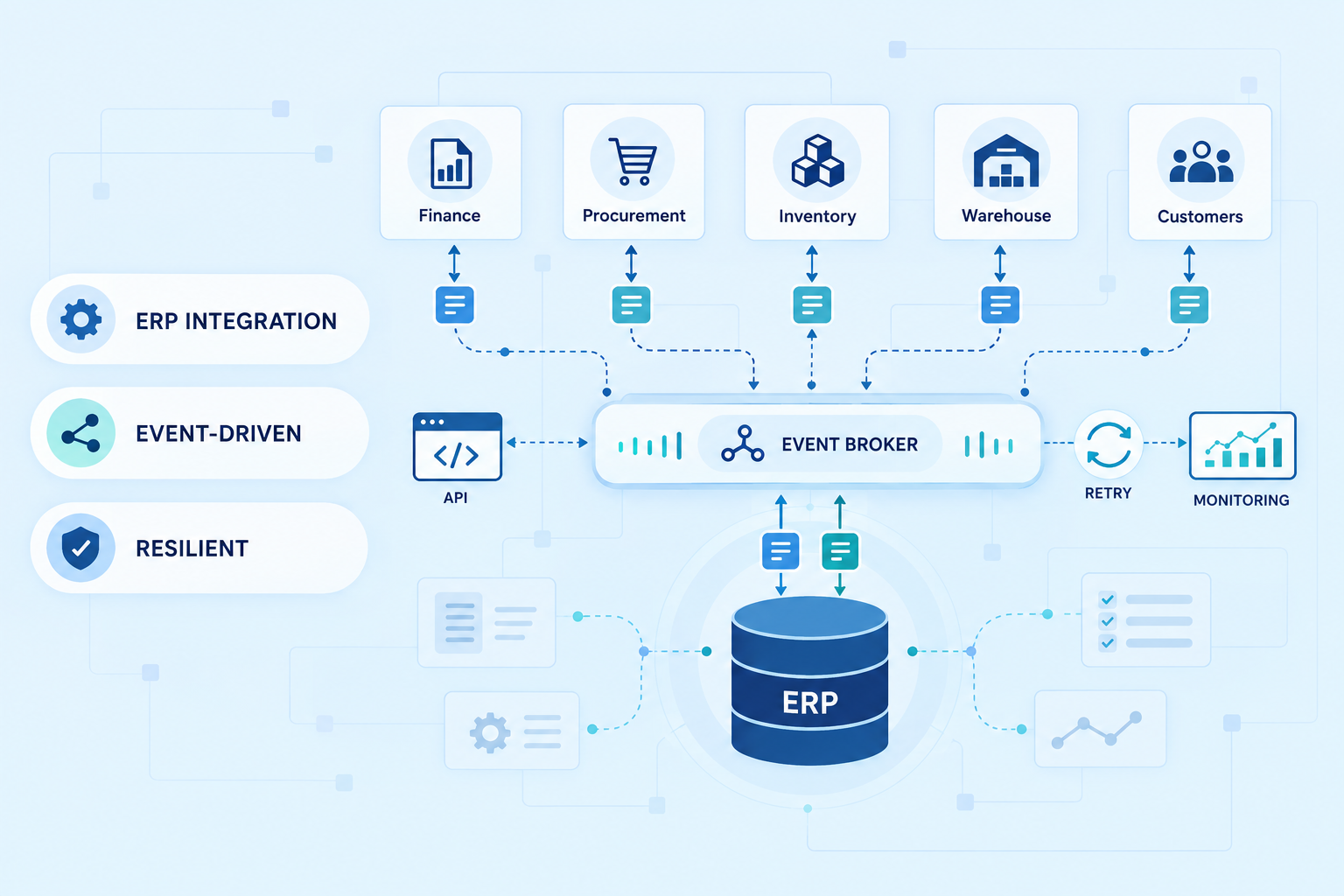
Supplier portals, planning engines, ERP and warehouse systems do not update atomically. Use correlation IDs, idempotent commands, status callbacks and reconciliation queues. Stop if the source record changed after analysis. Never let an agent retry a financial or inventory transaction blindly.
Measure decision quality
Track time from supplier notice to disposition, manual research effort, expedites, schedule changes, late orders and recommendation overrides. Review false alarms and missed dependencies. Savings should be demonstrated through fewer disruptions or lower handling cost, not assumed from faster screen navigation.
The practical takeaway: agentic ERP should illuminate consequences before it automates transactions. A reliable impact map gives planners time to make better trade-offs while people retain accountability for commitments to suppliers, factories and customers.
From announcement to dependable operations
Start with a bounded business problem and an accountable owner. Record the current cost, delay, failure rate, and manual work before changing the architecture. Define a measurable outcome, but do not present an estimate as guaranteed savings. Include security, finance, operations, and the people who will support exceptions after launch.
Map the current workflow before selecting technology. Identify the source of truth, approval points, downstream consumers, sensitive data, recovery objectives, and every manual workaround. Decide which step the new capability improves and which steps remain unchanged. This prevents a demonstration from being mistaken for an end-to-end operating solution.
Build a representative pilot with real permissions, data volume, dependency behavior, and user roles. Test peak demand, missing data, stale configuration, denied access, duplicate input, partial failure, recovery, and rollback. Document what continues when the new capability is unavailable. Keep an approved manual path for high-consequence decisions.
Security must be part of the design. Use separate workload identities, short-lived credentials, least privilege, encrypted transport and storage, controlled secrets, and auditable administrative access. Treat retrieved documents, event payloads, model output, and third-party responses as untrusted input. Validate every action at the boundary where it affects money, data, equipment, customers, or regulated records.
Cost controls need similar depth. Tag usage to a product and owner, define budgets and anomaly thresholds, measure cost per successful business outcome, and include integration, support, data movement, licensing, and training. A lower infrastructure bill can be offset by more exceptions or human correction. Evaluate total process cost rather than one service price.
Operate the result like a product. Monitor availability, latency, unit cost, data quality, security findings, user adoption, exceptions, and support effort. Version configurations and decision rules. Log changes and approvals. Review whether the capability still solves the original problem as prices, products, and workflows evolve.
Prepare the support model before launch. Give responders dashboards, runbooks, ownership, escalation paths, and safe diagnostic access. Alert on stale data and silent degradation, not only complete failure. Practice a dependency outage and verify that queued work, retries, reconciliation, and user communication behave as designed.
Change management is also technical risk control. Explain what users should trust, what they must verify, and how they report a wrong result. Train with real scenarios and capture overrides as useful feedback. Do not measure adoption by logins alone; measure whether the process becomes faster, safer, or more accurate.
Maintain a decision record that states why the technology was selected, which alternatives were considered, which risks were accepted, and what would trigger redesign or retirement. Review it after incidents and major vendor changes. Portability does not require avoiding managed services; it requires knowing which data, contracts, identities, and operational procedures must survive a change.
Expansion should follow evidence. Compare the pilot with its baseline, include the cost of integration and governance, and retire components that no longer earn their complexity. A new feature creates value only when teams can understand it, control it, recover it, and improve it without depending on one specialist.
Finally, schedule a formal review after thirty and ninety days. Ask whether users changed behavior, whether exceptions moved elsewhere, and whether actual costs match the forecast. Publish the findings to sponsors and delivery teams. If value is weak, narrow the scope or stop. Responsible innovation includes the ability to end an experiment cleanly.
Sources
- Microsoft Dynamics 365 Blog — Building the future of agentic ERP
- Microsoft Learn — Dynamics 365 Supply Chain Management release plan
Build it with Cogniquaint experts
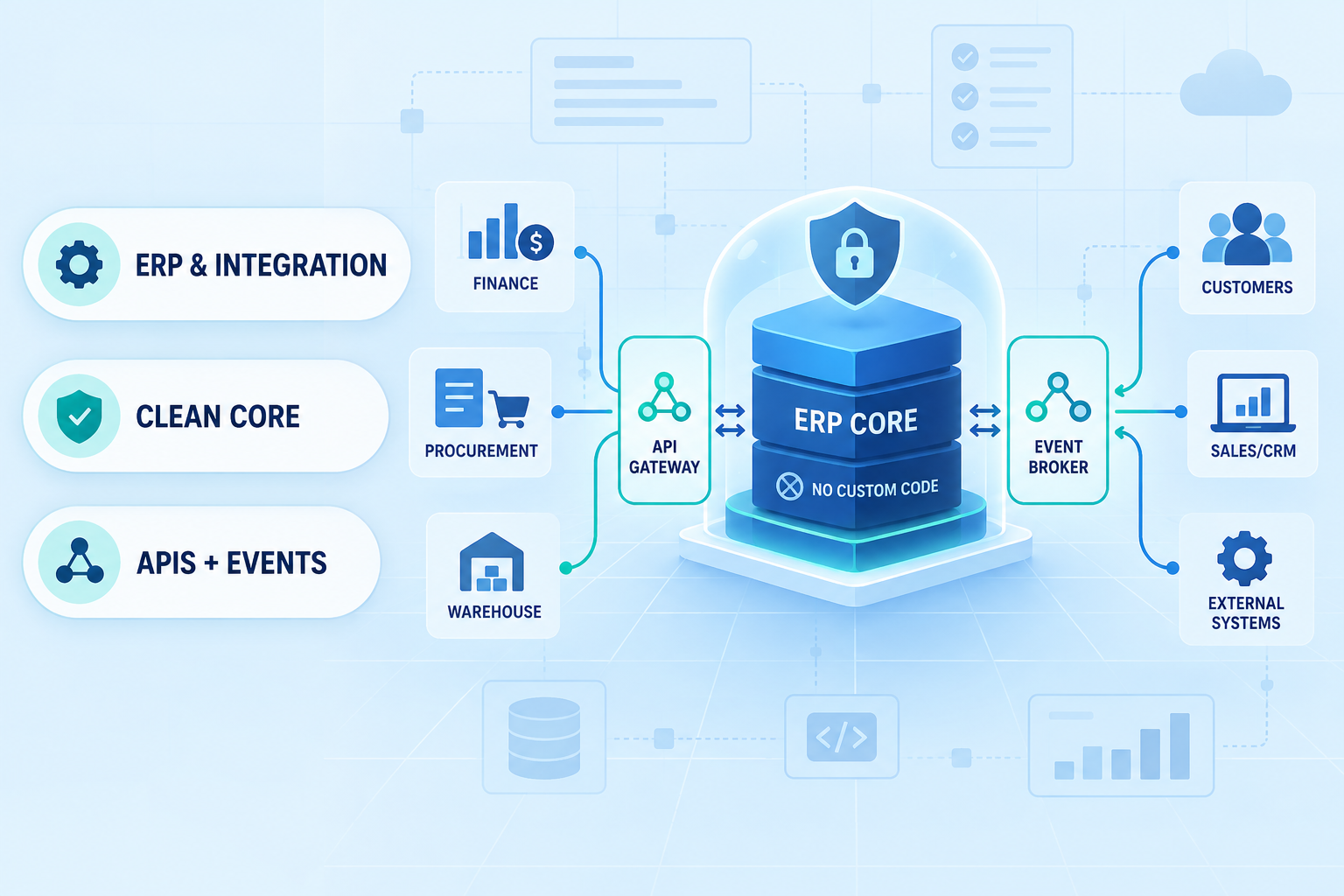
Cogniquaint’s ERP and integration experts can map purchase-to-production dependencies, improve master-data quality, connect supplier and planning events, design explainable impact analysis, and implement approval, idempotency and reconciliation controls around every committed change.
Work with Cogniquaint
Ready to elevate your operations with AI-powered insights?
Get in touch with us to build your next intelligent solution.