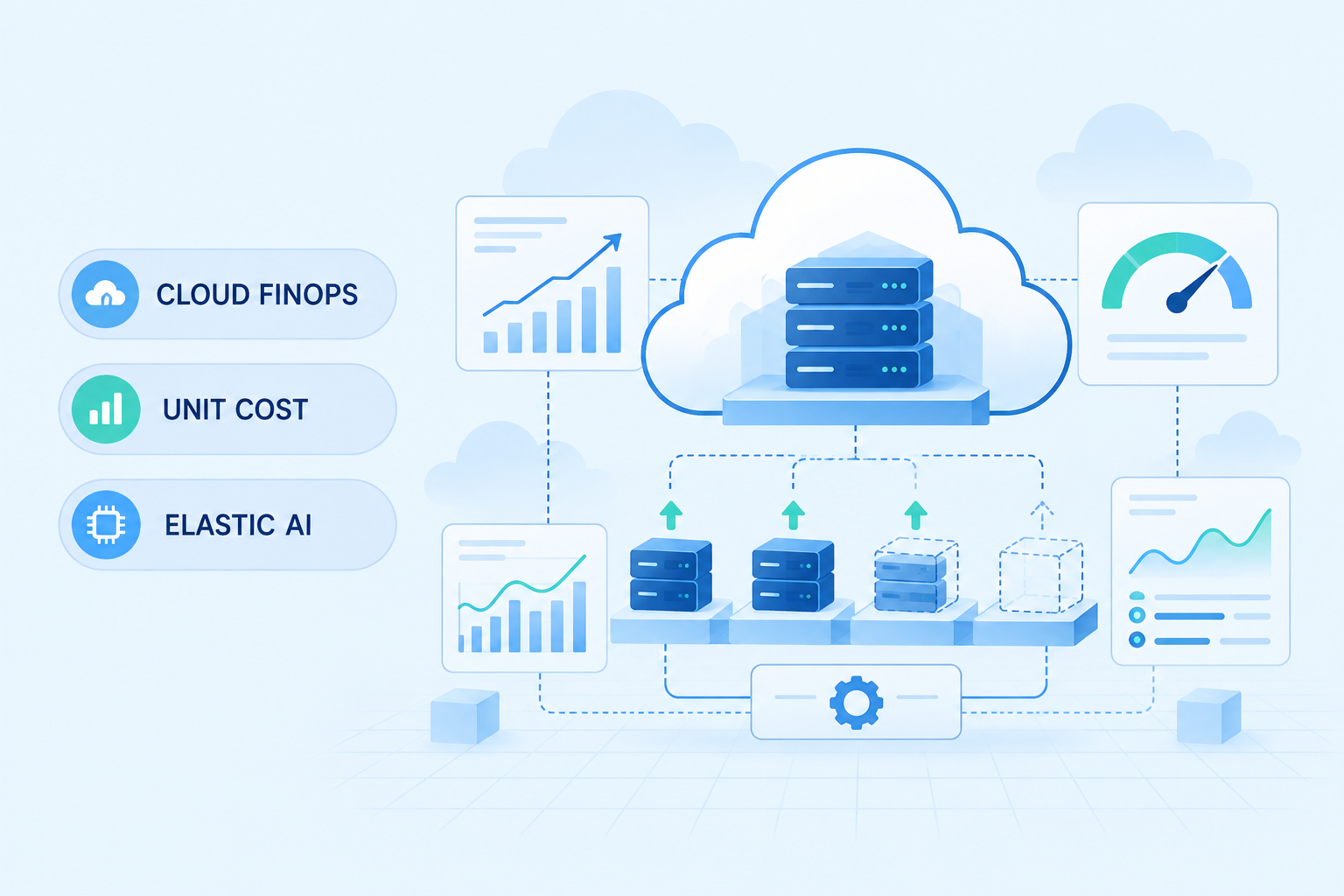


Agentic and generative-AI applications create awkward database demand. A user action can start several tools, memory lookups, checkpoints, and audit writes, then activity may fall quiet. Provision for the peak and idle capacity costs money. Provision too low and the application stalls when a burst arrives.
AWS announced on September 30 that Aurora Serverless can add up to 16 Aurora Capacity Units to current capacity within a second on supported platform versions, continue to 256 ACUs, and scale down to zero when idle. The launch is enabled by default on platform versions 3 or 4, according to AWS. The headline is attractive, but teams should validate versions, regions, engine support, and workload behavior before projecting savings.
Faster scaling does not replace sizing
Aurora Serverless operates inside the minimum and maximum range you configure. If the maximum is too low, faster increments cannot exceed it. If the minimum is too high, idle cost remains. Each writer and reader has its own capacity, so total cluster consumption is not simply the number shown for one instance.
AWS documents one ACU as roughly two GiB of memory plus corresponding CPU and networking. Start with measured concurrency, working-set size, connection count, query latency, and failover requirements. Load-test from realistic starting capacity, not from a warm cluster already near the target.
Scale-to-zero has a cold side
Supported engine and platform versions can auto-pause at zero ACUs. That eliminates database compute while idle, but storage and other resources remain. The first connection must resume the database. For development, intermittent batch jobs, or long-idle tools, this can be valuable. A customer checkout or plant-critical service may need a nonzero minimum for consistent response.
AWS recommends choosing a minimum that can hold the application’s working set in the buffer pool when immediate readiness matters. At zero, caches cool. Test resume time, query warm-up, connection timeouts, and application retry behavior.
Control the burst at the application
A database that scales quickly can still be overwhelmed by a sudden connection storm or inefficient query. Use connection pooling, bounded concurrency, backpressure, query timeouts, and idempotent retries. Agent loops should have budgets; a tool error must not trigger unlimited database calls.
Separate interactive traffic from background enrichment where possible. Queue nonurgent work and pace consumers. Monitor whether more capacity improves throughput or simply enables wasteful queries to run in parallel.
Measure cost per useful outcome
Track ServerlessDatabaseCapacity, ACU utilization, connections, transactions, query latency, I/O, storage, and application completion. Relate them to a business unit such as completed agent task, order processed, or document reconciled. Include readers, backups, data transfer, monitoring, and engineering overhead.
Compare serverless with a provisioned baseline over the full demand cycle. Bursty workloads with long idle windows may benefit most. A steady, predictable database can be cheaper or simpler with provisioned capacity. Do not select an architecture from the word serverless alone.
Test platform and version transitions
AWS notes that scaling capability depends on both engine and platform version; the lowest supported capability determines the range. Inventory clusters and verify ServerlessV2PlatformVersion. Upgrade in staging, reproduce peak traffic, test pause and resume, and confirm observability before production.
Capacity-range changes take effect immediately. Treat them as production changes with approval, monitoring, and rollback values. Coordinate with maintenance and incident teams so a limit change during an outage does not hide the root cause.
A practical rollout
Choose a noncritical bursty service. Capture two weeks of traffic and cost. Set conservative maximum capacity and a minimum that meets current latency. Stress test, then lower the minimum or try zero during a controlled window. Validate connection recovery and downstream timeouts.
For ERP assistants or maintenance copilots, classify transactions. Read-only searches may tolerate a delayed resume; posting inventory or creating work orders requires stronger consistency, idempotency, and audit. Keep business controls above the database elasticity layer.
Elastic capacity can reduce the compromise between idle waste and burst performance. The winning design pairs it with bounded applications, tested cold starts, visible unit economics, and limits chosen from evidence.
Turn the idea into an accountable rollout
Before funding a production rollout, name the business owner, technical owner, security reviewer, support team, and the person authorized to stop or reverse the change. Record the baseline process, its current cost or delay, and the outcome the project is expected to improve. A useful target is measurable without pretending that every benefit can be guaranteed in advance.
Deliver in a bounded slice with representative data and real users. Test normal operation, peak demand, dependency failure, permission loss, duplicate input, recovery, and rollback. Document what continues when the new capability is unavailable. Train the people who will handle exceptions rather than only the team building the happy path.
After launch, review reliability, unit cost, user adoption, false alerts or exceptions, support effort, and realized process improvement. Keep a decision log for threshold and configuration changes. Expand only when evidence shows that the operating model is sustainable. This discipline turns an appealing technology announcement into a service the organization can trust, support, and improve.
Sources
Build it with Cogniquaint experts
Cogniquaint’s cloud and data experts can profile database demand, model serverless economics, tune Aurora capacity and connection behavior, load-test AI bursts, and build cost and performance controls around real business outcomes.
Work with Cogniquaint
Ready to elevate your operations with AI-powered insights?
Get in touch with us to build your next intelligent solution.