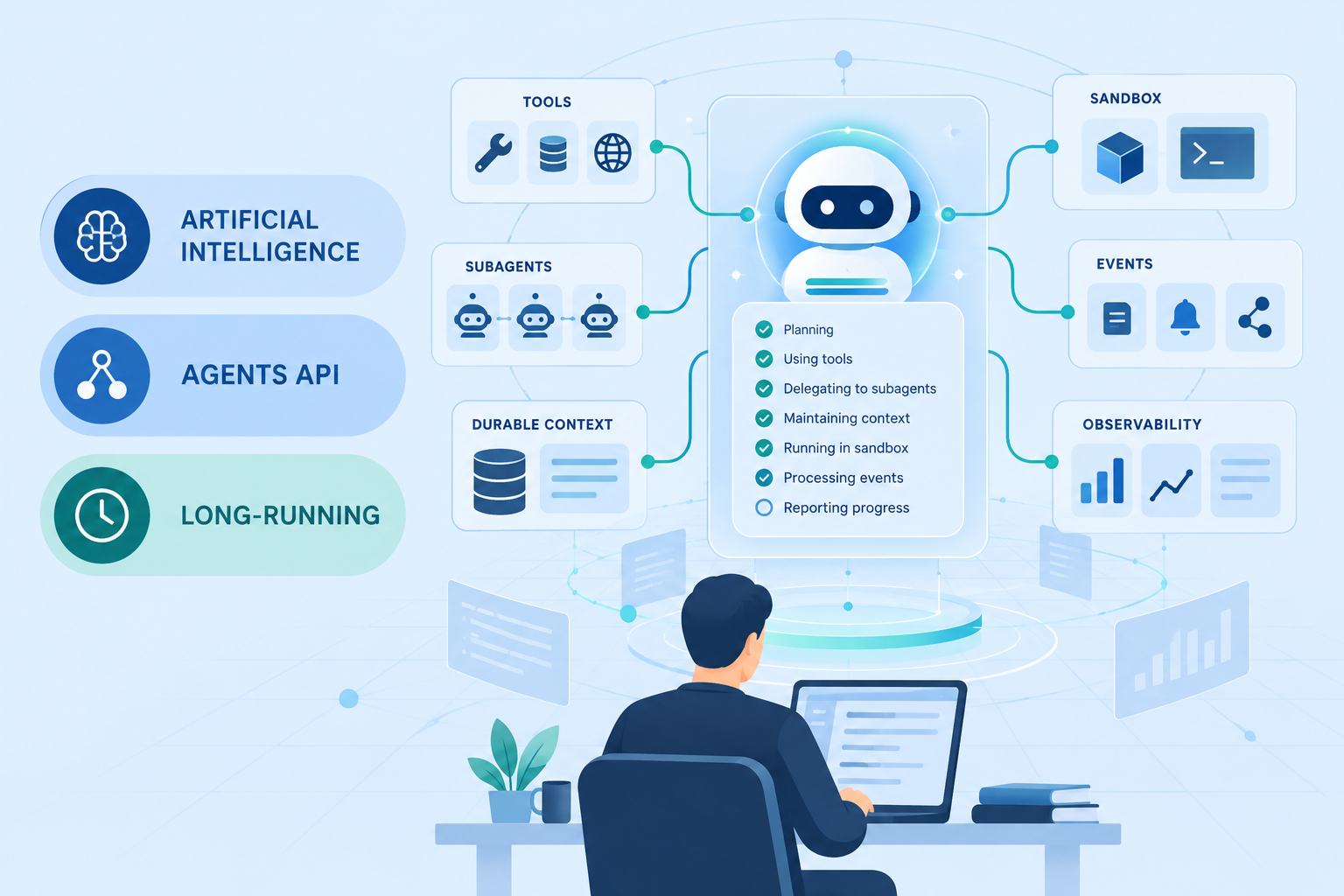


During an outage, engineers lose time gathering context. A failed Lambda function may depend on API Gateway, queues, storage, databases, workflows, permissions, and a recent deployment. Logs live in different places, alarms show symptoms, and the responder reconstructs a timeline under pressure. AWS has added a serverless capability to AWS MCP Server intended to help AI coding agents inspect Lambda functions and connected resources.
AWS says the capability can correlate error signals against a seven-day baseline, surface recurring errors, retrieve deployed configuration, build a timeline of changes, and analyze latency across connected services. This is a promising investigation assistant. It is not a reason to give an agent unrestricted production authority.
Where AI can genuinely save time
An assistant can standardize the first fifteen minutes: identify the affected function, collect alarms and logs, list dependencies, compare configuration, and highlight changes near the incident. It can translate scattered evidence into hypotheses and link responders to the underlying signals. That reduces navigation work and helps less-familiar engineers form a useful picture.
The value should be measured in time to useful hypothesis, time to identify a relevant change, and responder effort—not in the number of generated explanations. A confident narrative that misses the real cause delays recovery.
Keep evidence separate from inference
Every conclusion should point to concrete evidence: metric window, log query, configuration value, deployment event, or dependency status. The interface must distinguish observed facts from inferred causes and suggested actions. Preserve timestamps and resource identifiers so a responder can reproduce the investigation.
A seven-day baseline may miss monthly cycles, a new application, or a slow seasonal change. An absence of correlated errors does not prove health. Operators need to understand the observation window and data gaps.
Start read-only
Use a dedicated role with access limited to the accounts, regions, logs, metrics, traces, and configuration required for diagnosis. Deny mutation initially. Production data can contain secrets, customer identifiers, and business content; filter and redact before tool output enters an AI context.
Separate development, staging, and production credentials. Log tool calls and retain the incident session according to policy. Review what data can leave the boundary, which model processes it, and how long it is retained.
Human approval for remediation
An agent may suggest rolling back a deployment, raising concurrency, changing a timeout, or replaying messages. Each has consequences. A rollback can reintroduce a vulnerability; more concurrency can overload a database; replay can duplicate orders. Route suggestions through the established incident commander and change controls.
Begin with runbook retrieval and command drafting. If later automation is justified, allow only narrowly defined actions with parameter validation, blast-radius limits, approval, dry-run output, and reversal. Emergency convenience must not erase accountability.
Design for bad AI behavior
Test misleading logs, simultaneous failures, missing telemetry, stale configuration, permission denial, and prompt injection inside log text or resource metadata. Treat all retrieved content as untrusted data. The agent should not interpret a log message as an instruction or reveal credentials found during troubleshooting.
Rate-limit diagnostic queries so an incident investigation does not create a monitoring bill spike or throttle operational APIs. Use timeouts and budgets for agent loops. If the assistant fails, responders must retain direct access to dashboards and runbooks.
A controlled adoption path
Replay completed incidents first. Give the agent only evidence available at the time and compare its hypotheses with the post-incident review. Measure relevant evidence retrieved, false leads, omissions, token and API cost, and time saved. Then use it in staging incidents before a read-only production pilot.
Train responders on limitations and make feedback easy. Record whether a suggestion helped, was irrelevant, or was unsafe. Review recurring misses to improve telemetry and runbooks rather than only tuning prompts.
Broader operational value
The same pattern can support ERP integrations, ecommerce flows, and plant-data APIs built on serverless components. An agent may correlate a failed inventory update with queue growth and a configuration change, but business reconciliation remains necessary. Technical recovery does not guarantee that every order or production confirmation reached its destination.
AI-assisted diagnosis is most valuable as a disciplined evidence collector and hypothesis generator. Keep access narrow, remediation human-owned, and evaluation grounded in real incidents. That combination can shorten outages without creating a new uncontrolled operator.
Turn the idea into an accountable rollout
Before funding a production rollout, name the business owner, technical owner, security reviewer, support team, and the person authorized to stop or reverse the change. Record the baseline process, its current cost or delay, and the outcome the project is expected to improve. A useful target is measurable without pretending that every benefit can be guaranteed in advance.
Deliver in a bounded slice with representative data and real users. Test normal operation, peak demand, dependency failure, permission loss, duplicate input, recovery, and rollback. Document what continues when the new capability is unavailable. Train the people who will handle exceptions rather than only the team building the happy path.
After launch, review reliability, unit cost, user adoption, false alerts or exceptions, support effort, and realized process improvement. Keep a decision log for threshold and configuration changes. Expand only when evidence shows that the operating model is sustainable. This discipline turns an appealing technology announcement into a service the organization can trust, support, and improve.
Sources
Build it with Cogniquaint experts
Cogniquaint’s AI, cloud, security, and operations experts can design a read-only diagnostic pilot, establish least-privilege access and evidence citations, evaluate agents against real incidents, and add approval-based automation only where risk and recovery are understood.
Work with Cogniquaint
Ready to elevate your operations with AI-powered insights?
Get in touch with us to build your next intelligent solution.