

A modern lakehouse loses much of its value when operational reference data arrives only in a nightly batch. Pricing rules, equipment status, inventory attributes or customer entitlements can change while analysts and downstream services continue working from yesterday’s state. Full extracts reduce staleness, but repeatedly scanning and rewriting large tables consumes source capacity, network bandwidth and compute.
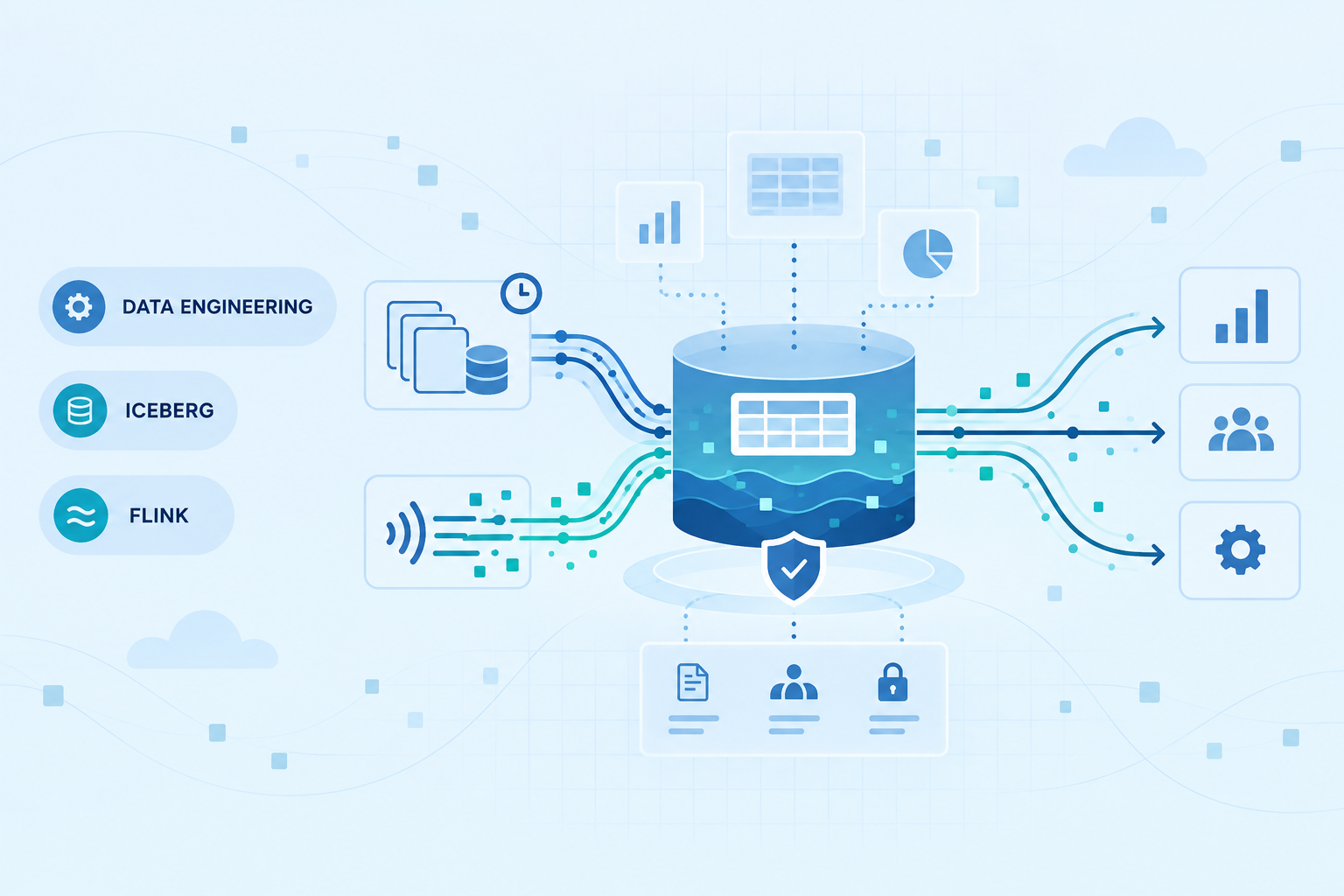
A recent AWS architecture shows a different pattern: capture inserts, updates and deletes from an operational database, buffer them in a stream, transform the change envelope, and let Amazon Data Firehose apply those operations to Apache Iceberg tables. The implementation used by United Airlines is vendor-specific, but the engineering decisions apply to any CDC-to-open-table pipeline.
Begin with the required freshness
“Real time” is not a design target. Define the maximum acceptable age for each consumer, plus the recovery objective after an outage. A revenue decision may need minutes; a regulatory extract may prioritize completeness over speed. The target determines buffer interval, compute, file size and operating cost.
Measure freshness from source commit time to successful query visibility—not only from arrival in the stream. Include source-log delay, queueing, transformation, table commit, catalog visibility and query-engine caching.
Preserve a trustworthy change envelope
Every event needs source database and table, operation type, primary key, transaction or log position, source commit timestamp and schema version. Do not infer deletes from missing rows. Keep the raw envelope in durable storage long enough to replay and investigate.
The transform should be deterministic, versioned and observable. Reject malformed events into a quarantined path with the correlation data needed to repair them. Never silently convert an unknown operation into an insert.
Partition for scale without breaking order
A stream partitioned only by table can force all changes for a busy table through one shard. Partitioning by primary key spreads load while retaining order for each row. Confirm how multi-row transactions behave and whether consumers require transaction-wide ordering. Hot keys and skew need their own load tests.
Provisioned shards, replication capacity and downstream write quotas remain real limits even when most components are managed. Alert before throttling turns a small backlog into hours of stale data.
Model updates and deletes explicitly
Iceberg format version 2 supports row-level changes. A merge-on-read design can record updates as a delete plus a new row and resolve the current view during reads. This improves ingest speed but adds delete files and read work. Define a unique key, equality-delete behavior and table-maintenance policy before production.
Test repeated updates, delete-before-insert anomalies, duplicate delivery and late events. Delivery is often at least once, so correctness depends on idempotent application and stable source positions.
Balance latency against file health
Short buffers reduce waiting time but create more frequent commits and smaller files. Long buffers improve file efficiency but increase freshness delay. Choose by workload volume and service target, then measure the result. Schedule compaction, snapshot expiration and orphan-file cleanup. Include those jobs in cost estimates.
Handle schema evolution as a contract
Classify additive, widening, rename, type-change and removal events. Decide which can flow automatically and which must stop the affected table. Keep producers and Iceberg schemas under compatibility tests. A CDC stream can propagate a breaking source change faster than a nightly job, so the guardrail must be faster too.
Reconcile continuously
Compare source and destination row counts, key samples, checksums or business totals at defined watermarks. Track lag, duplicate events, rejected records, commit failures, delete-file growth and query freshness. Periodically rebuild a table from an authoritative snapshot and compare it with the CDC result.
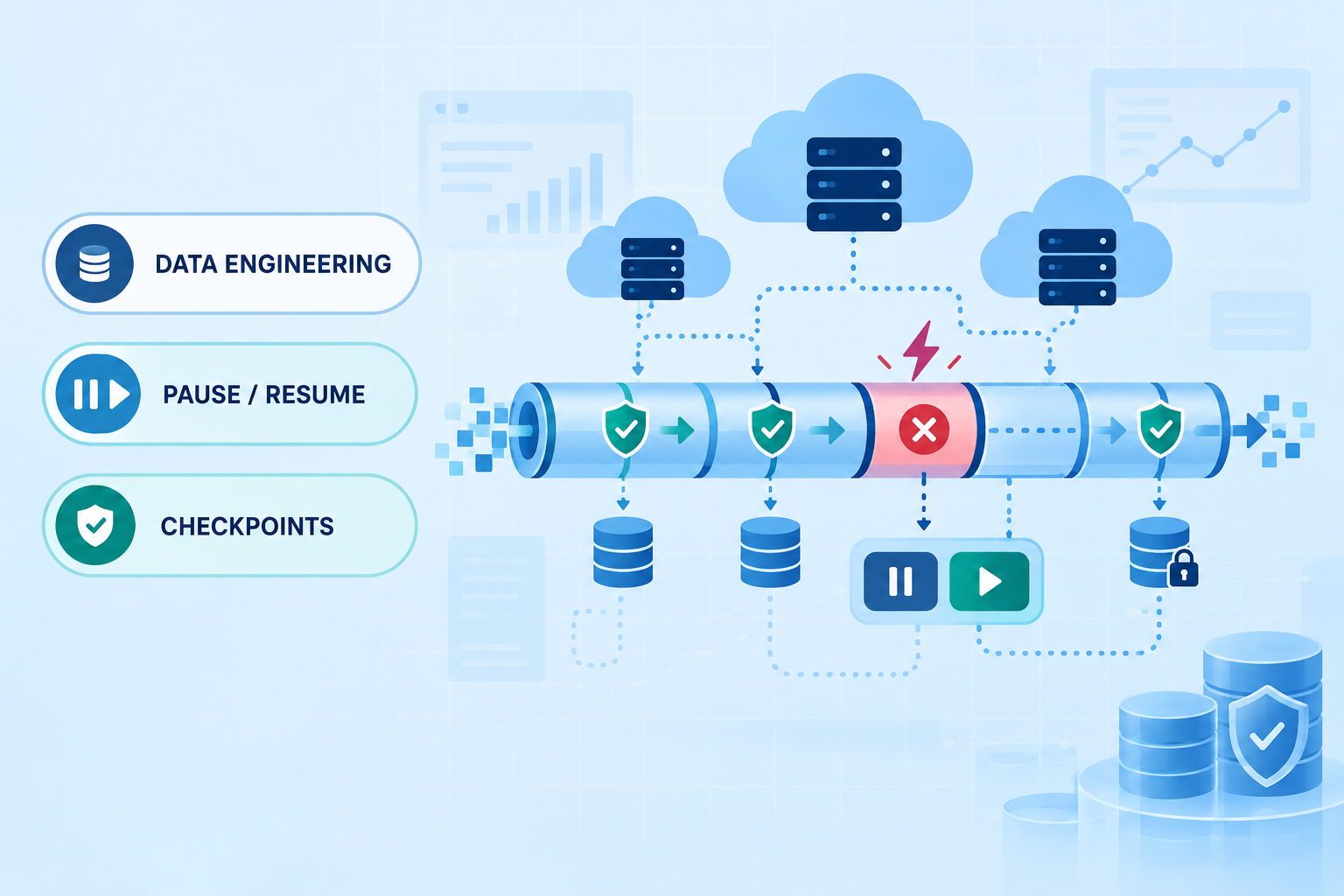
Provide a controlled replay procedure from raw events. Operators should be able to identify a bounded time window, pause affected consumers, replay idempotently, reconcile and resume without improvisation.
Protect operational systems
CDC access should be read-only and narrowly scoped. Encrypt streams and storage, protect secrets, restrict catalogs, and mask sensitive fields before broad analytics access. Test source failover and log retention: a prolonged outage can exceed the available change history and require a fresh snapshot.
The takeaway: streaming CDC into Iceberg can remove stale-data bottlenecks without returning to a proprietary analytics silo. The value comes from disciplined keys, ordering, replay, maintenance and reconciliation—not merely from shortening the buffer interval.
From announcement to dependable operations
Start with a bounded business problem and an accountable owner. Record the current cost, delay, failure rate, and manual work before changing the architecture. Define a measurable outcome, but do not present an estimate as guaranteed savings. Include security, finance, operations, and the people who will support exceptions after launch.
Map the current workflow before selecting technology. Identify the source of truth, approval points, downstream consumers, sensitive data, recovery objectives, and every manual workaround. Decide which step the new capability improves and which steps remain unchanged. This prevents a demonstration from being mistaken for an end-to-end operating solution.
Build a representative pilot with real permissions, data volume, dependency behavior, and user roles. Test peak demand, missing data, stale configuration, denied access, duplicate input, partial failure, recovery, and rollback. Document what continues when the new capability is unavailable. Keep an approved manual path for high-consequence decisions.
Security must be part of the design. Use separate workload identities, short-lived credentials, least privilege, encrypted transport and storage, controlled secrets, and auditable administrative access. Treat retrieved documents, event payloads, model output, and third-party responses as untrusted input. Validate every action at the boundary where it affects money, data, equipment, customers, or regulated records.
Cost controls need similar depth. Tag usage to a product and owner, define budgets and anomaly thresholds, measure cost per successful business outcome, and include integration, support, data movement, licensing, and training. A lower infrastructure bill can be offset by more exceptions or human correction. Evaluate total process cost rather than one service price.
Operate the result like a product. Monitor availability, latency, unit cost, data quality, security findings, user adoption, exceptions, and support effort. Version configurations and decision rules. Log changes and approvals. Review whether the capability still solves the original problem as prices, products, and workflows evolve.
Prepare the support model before launch. Give responders dashboards, runbooks, ownership, escalation paths, and safe diagnostic access. Alert on stale data and silent degradation, not only complete failure. Practice a dependency outage and verify that queued work, retries, reconciliation, and user communication behave as designed.
Change management is also technical risk control. Explain what users should trust, what they must verify, and how they report a wrong result. Train with real scenarios and capture overrides as useful feedback. Do not measure adoption by logins alone; measure whether the process becomes faster, safer, or more accurate.
Maintain a decision record that states why the technology was selected, which alternatives were considered, which risks were accepted, and what would trigger redesign or retirement. Review it after incidents and major vendor changes. Portability does not require avoiding managed services; it requires knowing which data, contracts, identities, and operational procedures must survive a change.
Expansion should follow evidence. Compare the pilot with its baseline, include the cost of integration and governance, and retire components that no longer earn their complexity. A new feature creates value only when teams can understand it, control it, recover it, and improve it without depending on one specialist.
Finally, schedule a formal review after thirty and ninety days. Ask whether users changed behavior, whether exceptions moved elsewhere, and whether actual costs match the forecast. Publish the findings to sponsors and delivery teams. If value is weak, narrow the scope or stop. Responsible innovation includes the ability to end an experiment cleanly.
Sources
- AWS Architecture Blog — Streaming database changes to Apache Iceberg
- Amazon Data Firehose documentation — Apache Iceberg destinations
Build it with Cogniquaint experts
Cogniquaint’s data engineering experts can assess source logs and freshness needs, design CDC envelopes and partitioning, implement Iceberg write and maintenance policies, build reconciliation and replay controls, and operationalize the pipeline with your analytics and application teams.
Work with Cogniquaint
Ready to elevate your operations with AI-powered insights?
Get in touch with us to build your next intelligent solution.